Ayatollah Khamenei spoke (C-Span translation) at Tehran University about the Iranian election and the aftermath of demonstrations. He praised the 85% turnout of some 40 million citizens as proof of the Iranian people’s belief in and trust of the Iranian Revolutionary government. He argued that if the Iranian people were not supporters of the existing revolution they would not have voted. The people had shown their trust in the democratic process of the Revolution. This thesis was central to a presentation for national and international impact. The Ayatollah described each of the principal presidential candidates as long time members, in good standing, of the Revolutionary establishment, a point he argued further spoke to the legitimacy and strength of the existing form of government. Demonstrations were counter-revolutionary and should cease, in large measure, because there are existing legal avenues for challenging “specific” aspects of the voting. Demonstrations might also, he warned, have the unintended consequences of violence and death for which political leaders would be held accountable. Khamenei repeatedly warned about the overt and covert counter-revolutionary actions of the evil nations of the United States and England.
Khamenei spoke as a leader concerned about the increasing commitment to and successes of the United States in Iraq, Afghanistan and in cooperation with Pakistan. Iran is certainly concerned about the strength and intentions of Israel and the Sunni kingdom of Saudi Arabia. Khamenei and the ruling council were not about to alter the ruling paradigm at a time when any change might well be considered by its “enemies” as a weakening of the Islamic/Shia control. The results of the election, accordingly, were always predetermined though pretense of the debates, speeches and rhetoric gave hope to the Iranian people and the World of democratic change. Khamenei explicitly gave his blessing to Ahmadinejad’s policies including the nuclear issues.
Each of the candidates were in fact chosen and blessed by Khamenei and his ruling council prior to the elections. An honest election might have created a circumstance supporting our hope to change the rhetoric and alter the stated objectives of Ahmadinejad. I doubt it. I am merely a reader of current events with no particular experience or book learning about the Middle East but it appears to me that the forces at work across the Middle East from Gaza to India are too volatile and premised on ethnic and national phobias for any government to drift away from the existing fortress each occupies. Enlightened policy by the United States, foremost in the Palestinian/Israeli conflict, over an extended period of time is the only basis of hope.
Saturday, June 20, 2009


Saturday, May 30, 2009
Judging the Judge
I am increasingly sickened by the political rhetoric regarding Judge Sotomayor as exploited by the shallow, histrionic “news” media. The latest “reporting” and “analysis” of two comments by Judge Sotomayor is ridiculous in emphasis and baseless in relevance. Judge Sotomayor has some thirty years of public service as an attorney in varied roles. She has through those years openly presented herself, her integrity, her competence, her judgment, her self-control, her intelligence, and her grasp of the law. As an assistant district attorney she made judgment calls on who would be prosecuted and what charges they would face. In the prosecution of these cases her character, demeanor and integrity were open to the scrutiny of the public, the defense bar, the media and the judges before who the cases were tried. In private practice the scrutiny continued by the courts, the New York Bar Association, her clients and, at times again, the public. Sitting as a federal District Court judge, her personal character and grasp of the law would have manifest itself repeatedly in the relatively fast paced, pressure filled dynamic of public trials. As a federal appellate judge her written opinions over the years provide another opportunity for reasoned analysis of her record. I do not know what will surface as the result of the now commencing political process but I do know that it is utterly preposterous to extract two sentences out the context of her career to rationally conclude anything of relevance.
In one of these statements she spoke of the difference in the functions of a trial court from those of the appellate courts. Trial courts deal with the facts and the applicable law in a unique circumstance. In her comment she explicitly referred to the law as “percolating” through the federal appellate courts. She did not suggest that it was a responsibility of any court to “make new law.” Judge Sotomayor correctly referred to policy formulation as a function of appellate courts. Appellate courts put form to the law in response to changed conditions and clarify and/or apply existing precedent to new factual situations, all of which impact cases and situations outside the particular case being decided.
Her second comment at issue seemed to suggest that a person of varied, life experience might make a better judge then one of limited life experience. I agree. Of course, personal experience must be coupled with other qualities, such as, a deep sense of fairness, intelligence capable of understanding legal concepts, and a self-controlled demeanor all hopefully underlying a confident wisdom. Many judges, though there are exceptions, however have risen to that position in a social and professional context dominated by “good old boys” of strikingly similar backgrounds. In my thirty years as an attorney I have found it more the exception than the rule that existing judicial selection processes elevate a man or woman to the bench personally and professionally suited to the task. The search for truth in a trial court and the desire for justice in all courts are played out in crucibles where human emotions, tragedies, ambitions, dreams and expectations are compressed into a formal, legal form. A judge of limited exposure to and appreciation for the realities of life is less likely to correctly or adequately evaluate the facts of the case. The stamping of legal principles unto formless facts of a case would be a relatively easy process for most competent attorneys. Bringing Justice to the process requires a judge of substantive human and legal capacity.
In one of these statements she spoke of the difference in the functions of a trial court from those of the appellate courts. Trial courts deal with the facts and the applicable law in a unique circumstance. In her comment she explicitly referred to the law as “percolating” through the federal appellate courts. She did not suggest that it was a responsibility of any court to “make new law.” Judge Sotomayor correctly referred to policy formulation as a function of appellate courts. Appellate courts put form to the law in response to changed conditions and clarify and/or apply existing precedent to new factual situations, all of which impact cases and situations outside the particular case being decided.
Her second comment at issue seemed to suggest that a person of varied, life experience might make a better judge then one of limited life experience. I agree. Of course, personal experience must be coupled with other qualities, such as, a deep sense of fairness, intelligence capable of understanding legal concepts, and a self-controlled demeanor all hopefully underlying a confident wisdom. Many judges, though there are exceptions, however have risen to that position in a social and professional context dominated by “good old boys” of strikingly similar backgrounds. In my thirty years as an attorney I have found it more the exception than the rule that existing judicial selection processes elevate a man or woman to the bench personally and professionally suited to the task. The search for truth in a trial court and the desire for justice in all courts are played out in crucibles where human emotions, tragedies, ambitions, dreams and expectations are compressed into a formal, legal form. A judge of limited exposure to and appreciation for the realities of life is less likely to correctly or adequately evaluate the facts of the case. The stamping of legal principles unto formless facts of a case would be a relatively easy process for most competent attorneys. Bringing Justice to the process requires a judge of substantive human and legal capacity.
Friday, March 27, 2009
My Friend Proposes "term limits" for Congress ...
I am reminded of another method for limiting legislative abuses:
In the ancient republic of the Locrains "[a] Locrain who proposed any new law stood forth in the assembly of the people with a cord round his neck, and if the law was rejected the innovator was instantly strangled." Edward Gibbon, The Decline and Fall of the Roman Empire, Forty-fourth Chapter.
In the ancient republic of the Locrains "[a] Locrain who proposed any new law stood forth in the assembly of the people with a cord round his neck, and if the law was rejected the innovator was instantly strangled." Edward Gibbon, The Decline and Fall of the Roman Empire, Forty-fourth Chapter.
You say "revolution," my friend...
My friend: You present an argument for a return of the American Revolutionary spirit to the citizens to retake control of a government for the people. The focus of your argument appears to be on the unresponsiveness to and derelictions of Constitutional responsibilities by elected politicians. You call for term limits and decry the unchecked spending and budget projections in the current economic crisis. Please consider:
Any "revolution" should carefully consider the circumstances creating the opportunity for dynamic change. To simply strike at the actors and performers would be meaningless. I am increasingly becoming convinced that the only "revolutionary" solution is one that strikes at those paradigms that have corrupted "our experiment." Among these are the wholesale deregulation of human greed which fostered illegal immigration as a cheap labor pool, fills the halls with lobbyists and their "contributions" and permitted securities fraud of unimaginable dimensions; an energy policy blinded by special interests and dangerous to our very existence; and a failure of the nation as a whole to stand up to and within political party systems that reward merely loyalty, ambition and money with apparently little, if any, regard for integrity, honor and commitment to the general welfare.
If it takes a substantial investment by our country to bring about a revolutionary change in these and other fundamental corruptions, so be it. As the founding fathers, we should be ready to personally sacrifice in the relatively short term and invest for the creation of a wiser and stronger United States of America.
Any "revolution" should carefully consider the circumstances creating the opportunity for dynamic change. To simply strike at the actors and performers would be meaningless. I am increasingly becoming convinced that the only "revolutionary" solution is one that strikes at those paradigms that have corrupted "our experiment." Among these are the wholesale deregulation of human greed which fostered illegal immigration as a cheap labor pool, fills the halls with lobbyists and their "contributions" and permitted securities fraud of unimaginable dimensions; an energy policy blinded by special interests and dangerous to our very existence; and a failure of the nation as a whole to stand up to and within political party systems that reward merely loyalty, ambition and money with apparently little, if any, regard for integrity, honor and commitment to the general welfare.
If it takes a substantial investment by our country to bring about a revolutionary change in these and other fundamental corruptions, so be it. As the founding fathers, we should be ready to personally sacrifice in the relatively short term and invest for the creation of a wiser and stronger United States of America.
Wednesday, March 18, 2009
To Sue on 3/7/09
My dear friend, you are most certainly correct that what is happening is frightening. And, more frightening is the fact that the fear is justified. I think the first thing that we in America must realize is that this is not a personal problem but rather an international crisis. Even China, now our selfish benefactor, is slipping. Other moderately and more heavily developed countries in Europe, Asia and the Americas are in the same boat. Significantly, they also are “throwing money” into their banks, infrastructure and markets. Now, this is not proof that this approach is the correct one since it could just be that everyone is wrong in choice of solution. Yet, I have to believe that the governments had sought their best available advice. So, it appears to me, that the real consensus is that governments are the only alternative for meaningful and necessary intervention. These are not just the so-called “socialist” countries of Western Europe. GDP’s have fallen across the board (even China) and so looking comparatively at spending as a percentage of GDP past and present is misleading at this time. I respectfully disagree that “every economist in the land” is seriously opposed to what is going on. And Cramer performs as an idiot. In the first place he is not an economist; like Rush (with no respect due to him) he is an entertainer. Cramer made his name on Wall Street as a practitioner during “bubbles.” Throughout the lead up to the crisis Cramer repeatedly screamed for investment and often urging investment in or contending the strength of corporations just prior to their collapse. There is enough on the internet, aside from Republican/Rush conservative sources, to see a broader picture.
Of course there is a great danger that such levels of government spending may create another inflationary crisis in the future. I think this is recognized by all including the Federal Reserve Chairman and the President. This concern is, I believe, the reason the President has announced a plan/intention/proposal to cut the federal deficit by something like a half within a stated time frame. The international community, which rightly still considers us the “strongest” economic entity, and our own market and banking communities need to have their confidence bolstered that the massive spending will have limits. I guess I have to mention the tax “increases” at this point since the lapse of the Bush cuts is a large part of the spending balance. Bush and the then Republican congress, on the verge of enormous expenditures for war, played the big “conservative” card that helped to push us from a negative national debt to the abyss we have today. No, though my exquisite manners and impeccable taste suggest that I am in the upper tax brackets, I fall far, far short. The “over $250,000” will suffer a return to tax levels of something like 39% rather than the present 37%. Actually, pre-Reagan I believe the rate was closer to 90%.
Please recall as well that the first ¾ trillion bailout late last year came at the urgent pleading of the Bush administration and the Fed; all this on top of the deficit of the Bush years. So, I find it quite disingenuous of Republican politicians to now scream about uncontrolled spending. Another tenet of the Republican Party has been the rejection of government interference, i.e. regulation, in business and Capitalism. So, quickly because I tend to ramble, let’s talk about the home mortgage crisis that was and is, by all accounts, a significant though not sole factor in the world-wide crisis. Here the Democrats and Republicans can take some blame, though each was motivated by different objectives, for pressing for expanded home ownership. So, “bad” loans were encouraged. Once these bad loans were in place they became subject to wholly unregulated (another joint mistake of the two Parties) derivatives. And imagination and greed piled more complex derivative upon complex derivative (all based upon the same bad or questionable loans). This was not simply the Fannie and Freddie situation though they were a part of it. Importantly, Fox, CNN, MSNBC, President Bush and Cramer, et al., were all advising and screaming spend, spend, spend. Recall that Bush said after 9/11 that all Americans need to get out and spend. So people, sheep that we are, pushed credit to the max, took out second mortgages, bought investment homes and used home equity to buy bling and gas guzzling trucks and vans. All the while input into the Treasury was cut substantially by the sacrosanct tax cuts. And the bubbles got bigger and bigger while warnings were ignored.
Now, in the first month, focus on that for a moment if you will – the first month, of this administration the Democratic House came up with a ridiculous, far-left package that reasonably was whittled down in the Senate. I accepted that Obama needed some time to assert his control over the congressional Democrats and that control is slowly becoming more evident though not complete by any means. It is significant, I believe, to recall those days long ago in November of last year when the majority of the American people repudiated the professed philosophy and expressed conduct of the conservative Republican Party. It can be argued that the vote for Obama was, to some measure, merely a rejection of the Bush cabal and not his Party values. And that may have some truth, however, it may also be correct that the Obama vote margin would be even greater in his favor, rejecting Republican values, except for the concern for Obama’s lack of experience.
I come from a generation raised with a belief in the reforms of the Roosevelt administration after the last Great Depression. Certainly, WW II changed the whole dynamic in bringing the world out of that depression but, as one example, unemployment dropped from some 25% to 10-12% before WWII based on such spending programs as the CCC’s and WPA. Roosevelt really was not the communist/socialist he is depicted as in some circles today. His policies were intended and did foster capitalism and business growth. I see Obama’s stated positions as similar. We need, in the context of vigorous debate, to give him some time. But, within that debate, ALL must recognize that a fundamental problem with our economy is a lack of confidence. A big part of the world’s problem is a corresponding lack of confidence in us. When our politicians vehemently reject and raise Armageddon as the necessary result of Obama’s policies it undercuts any positive effects of the programs. There must be a cautious balance in the public rhetoric. There will be ample opportunity to get back to the fear mongering of the Bush years during an election but for now they should cool it.
Substantively, I have absolutely no problem with the government spending (remember it is the ONLY source of recovery now) to increase jobs while repairing our roads, bridges and electrical grid (remember the falling bridges, failing dikes and blackouts due to antiquated structure); to enable and encourage start-up companies and entrepreneurs in developing new clean energy sources (rather than diminishing, polluting and foreign fossil fuels); to encourage and support educational opportunities for Americans in fields such as nursing and engineering so that we can BECOME AGAIN a competitive economic power (we now import nurses; high school dropout rates and our comparative (world)testing scores are abysmal); and revamp the medical system so that those companies that still pay or would pay a part of health care would not need to do so and their competitive outlook would be greater against the rest of the civilized world that has generally universal coverage and America would have a healthier work force (again our health care, as expensive as it is, is not as successful as in many other developed countries).
It is frightening and ANY alternative is a gamble based on too many probabilities as well as unintended consequences. The country picked a leader and he is putting out a plan. In combat, any plan may be modified prior to the assault to fit a changing situation and there will have to be adjustments – and there will be mistakes – in the administration plans. However, in combat, once the plan is being executed, even if it is not the optimum, if it is carried through with courage and vigor it can succeed.
Of course there is a great danger that such levels of government spending may create another inflationary crisis in the future. I think this is recognized by all including the Federal Reserve Chairman and the President. This concern is, I believe, the reason the President has announced a plan/intention/proposal to cut the federal deficit by something like a half within a stated time frame. The international community, which rightly still considers us the “strongest” economic entity, and our own market and banking communities need to have their confidence bolstered that the massive spending will have limits. I guess I have to mention the tax “increases” at this point since the lapse of the Bush cuts is a large part of the spending balance. Bush and the then Republican congress, on the verge of enormous expenditures for war, played the big “conservative” card that helped to push us from a negative national debt to the abyss we have today. No, though my exquisite manners and impeccable taste suggest that I am in the upper tax brackets, I fall far, far short. The “over $250,000” will suffer a return to tax levels of something like 39% rather than the present 37%. Actually, pre-Reagan I believe the rate was closer to 90%.
Please recall as well that the first ¾ trillion bailout late last year came at the urgent pleading of the Bush administration and the Fed; all this on top of the deficit of the Bush years. So, I find it quite disingenuous of Republican politicians to now scream about uncontrolled spending. Another tenet of the Republican Party has been the rejection of government interference, i.e. regulation, in business and Capitalism. So, quickly because I tend to ramble, let’s talk about the home mortgage crisis that was and is, by all accounts, a significant though not sole factor in the world-wide crisis. Here the Democrats and Republicans can take some blame, though each was motivated by different objectives, for pressing for expanded home ownership. So, “bad” loans were encouraged. Once these bad loans were in place they became subject to wholly unregulated (another joint mistake of the two Parties) derivatives. And imagination and greed piled more complex derivative upon complex derivative (all based upon the same bad or questionable loans). This was not simply the Fannie and Freddie situation though they were a part of it. Importantly, Fox, CNN, MSNBC, President Bush and Cramer, et al., were all advising and screaming spend, spend, spend. Recall that Bush said after 9/11 that all Americans need to get out and spend. So people, sheep that we are, pushed credit to the max, took out second mortgages, bought investment homes and used home equity to buy bling and gas guzzling trucks and vans. All the while input into the Treasury was cut substantially by the sacrosanct tax cuts. And the bubbles got bigger and bigger while warnings were ignored.
Now, in the first month, focus on that for a moment if you will – the first month, of this administration the Democratic House came up with a ridiculous, far-left package that reasonably was whittled down in the Senate. I accepted that Obama needed some time to assert his control over the congressional Democrats and that control is slowly becoming more evident though not complete by any means. It is significant, I believe, to recall those days long ago in November of last year when the majority of the American people repudiated the professed philosophy and expressed conduct of the conservative Republican Party. It can be argued that the vote for Obama was, to some measure, merely a rejection of the Bush cabal and not his Party values. And that may have some truth, however, it may also be correct that the Obama vote margin would be even greater in his favor, rejecting Republican values, except for the concern for Obama’s lack of experience.
I come from a generation raised with a belief in the reforms of the Roosevelt administration after the last Great Depression. Certainly, WW II changed the whole dynamic in bringing the world out of that depression but, as one example, unemployment dropped from some 25% to 10-12% before WWII based on such spending programs as the CCC’s and WPA. Roosevelt really was not the communist/socialist he is depicted as in some circles today. His policies were intended and did foster capitalism and business growth. I see Obama’s stated positions as similar. We need, in the context of vigorous debate, to give him some time. But, within that debate, ALL must recognize that a fundamental problem with our economy is a lack of confidence. A big part of the world’s problem is a corresponding lack of confidence in us. When our politicians vehemently reject and raise Armageddon as the necessary result of Obama’s policies it undercuts any positive effects of the programs. There must be a cautious balance in the public rhetoric. There will be ample opportunity to get back to the fear mongering of the Bush years during an election but for now they should cool it.
Substantively, I have absolutely no problem with the government spending (remember it is the ONLY source of recovery now) to increase jobs while repairing our roads, bridges and electrical grid (remember the falling bridges, failing dikes and blackouts due to antiquated structure); to enable and encourage start-up companies and entrepreneurs in developing new clean energy sources (rather than diminishing, polluting and foreign fossil fuels); to encourage and support educational opportunities for Americans in fields such as nursing and engineering so that we can BECOME AGAIN a competitive economic power (we now import nurses; high school dropout rates and our comparative (world)testing scores are abysmal); and revamp the medical system so that those companies that still pay or would pay a part of health care would not need to do so and their competitive outlook would be greater against the rest of the civilized world that has generally universal coverage and America would have a healthier work force (again our health care, as expensive as it is, is not as successful as in many other developed countries).
It is frightening and ANY alternative is a gamble based on too many probabilities as well as unintended consequences. The country picked a leader and he is putting out a plan. In combat, any plan may be modified prior to the assault to fit a changing situation and there will have to be adjustments – and there will be mistakes – in the administration plans. However, in combat, once the plan is being executed, even if it is not the optimum, if it is carried through with courage and vigor it can succeed.
Tuesday, March 17, 2009
Seppuku
As reported on nytimes.com today: "NEW YORK (Reuters) - A prominent U.S. senator gibed that executives of the troubled insurer American International Group Inc might consider suicide, adopting what he called a Japanese approach to taking responsibility for their actions.
Senator Charles Grassley, the top Republican on the Senate Finance Committee, made the comments Monday in an interview with a radio station in his home state of Iowa."
The Senator's comments brought out expressions of shock from the talking heads. I also am shocked. I am shocked that Senator Grassley would appear to believe that the executives in these "recently successful" business enterprises possess a level of moral character sufficient for them to accept responsibility and to publicly acknowledge their dishonor. Seppuku, as suggested here, is premised on a true sense of personal honor. Honor is manifest by the conscience and will of a person to do the right thing. The reflex of this honor is a sense of personal shame. Neither honor nor shame are admired qualities within capitalism or, presently, within our society. We must demand more of our leaders.
Senator Charles Grassley, the top Republican on the Senate Finance Committee, made the comments Monday in an interview with a radio station in his home state of Iowa."
The Senator's comments brought out expressions of shock from the talking heads. I also am shocked. I am shocked that Senator Grassley would appear to believe that the executives in these "recently successful" business enterprises possess a level of moral character sufficient for them to accept responsibility and to publicly acknowledge their dishonor. Seppuku, as suggested here, is premised on a true sense of personal honor. Honor is manifest by the conscience and will of a person to do the right thing. The reflex of this honor is a sense of personal shame. Neither honor nor shame are admired qualities within capitalism or, presently, within our society. We must demand more of our leaders.
Saturday, February 07, 2009
Stimulus and Support for the Presidency
Senator Lindsey Graham is being interviewed on a Fox News program as I write this. He charges that the President has “failed” and has lost an opportunity to bring the country together by going forward with a recovery bill that could only gain the support of three Republican senators. The senator’s commentary directly called into question the competence of the President to lead the country. Apparently this senator speaks for the entrenched 41 Republican senators who reject a compromise worked out in joint sessions today. Three Republicans, according to media reports, will vote with the Democratic majority to pass the compromise.
The consensus of the Congress has consistently appeared to be that an extraordinary fiscal stimulus effort by the federal government was immediately essential. Now, I understand that the bill presented to the Senate was the product of a Democratic House of Representatives relieving years of tension and contained “non-stimulative” options. Accordingly, I expected that appropriate and vigorous opposition would be raised to portions of the House bill in the Senate. But, it was also my expectation, given the unquestioned gravity of the national economic problems, that the Republican opposition would be tactical rather than strategic. In other words, though the posturing would be on strategic fundamentals, the attacks would be surgical amendments to individual provisions.
We are engaged in a fighting war on two fronts and, according to most political and economic projections, near the verge of a national or international depression. The media’s 24 hour cyclic headlining of quoted and synthesized hyperbole about the economic crisis by experts and fluttering, talking-heads has continued to shake the confidence of investors and non-investors, institutions and the institutionalized among our citizens. Whatever the validity of the conclusion, some 59 million American’s recently expressed a belief that Barack Obama, a Democrat, had the ability to lead this country through these perils; a conclusion with which I did not agree. This belief was a vote of confidence. Now, two weeks into his administration, the Cheneyesque assertions by a member of the United States Senate purposefully or ignorantly undercut that confidence and are unwarranted and irresponsible. The President’s personal efforts toward the Republican minority over this past week have been highly commendable, particularly in the shadow of President Bush’s open contempt for the then minority party. Whatever the strategic fiscal arguments might be currently, our citizens and the international community need confidence in our leadership. Statements from the United States Senate subverting confidence in our President of eighteen days, severely harms any prospect of success in recovery and the stature of the United States.
The Republican Party lost the confidence of the vast majority of Americans as evidenced in the results of the last two national elections. The leadership of a Republican President had been rejected around the world. However, as the Republican Party seeks to redefine, reassert or repeat its image, it need not and should not precipitously undercut the Presidency of the United States with attacks such as those of Sen. Graham. Speaking on the Senate floor, Sen. McCain said of the bill “This is not a bi-partisan” compromise. However, it is the intransigence of the Republican minority that brings failure to the President’s attempts at a bi-partisan stimulus bill. The compromise will, apparently as I write this, become the Law of the Land. Hopefully Republicans such as Sen. Graham will, however grudgingly, express a confidence in the President for the good of the country if not their party. Like it or not our President is a Democrat.
The consensus of the Congress has consistently appeared to be that an extraordinary fiscal stimulus effort by the federal government was immediately essential. Now, I understand that the bill presented to the Senate was the product of a Democratic House of Representatives relieving years of tension and contained “non-stimulative” options. Accordingly, I expected that appropriate and vigorous opposition would be raised to portions of the House bill in the Senate. But, it was also my expectation, given the unquestioned gravity of the national economic problems, that the Republican opposition would be tactical rather than strategic. In other words, though the posturing would be on strategic fundamentals, the attacks would be surgical amendments to individual provisions.
We are engaged in a fighting war on two fronts and, according to most political and economic projections, near the verge of a national or international depression. The media’s 24 hour cyclic headlining of quoted and synthesized hyperbole about the economic crisis by experts and fluttering, talking-heads has continued to shake the confidence of investors and non-investors, institutions and the institutionalized among our citizens. Whatever the validity of the conclusion, some 59 million American’s recently expressed a belief that Barack Obama, a Democrat, had the ability to lead this country through these perils; a conclusion with which I did not agree. This belief was a vote of confidence. Now, two weeks into his administration, the Cheneyesque assertions by a member of the United States Senate purposefully or ignorantly undercut that confidence and are unwarranted and irresponsible. The President’s personal efforts toward the Republican minority over this past week have been highly commendable, particularly in the shadow of President Bush’s open contempt for the then minority party. Whatever the strategic fiscal arguments might be currently, our citizens and the international community need confidence in our leadership. Statements from the United States Senate subverting confidence in our President of eighteen days, severely harms any prospect of success in recovery and the stature of the United States.
The Republican Party lost the confidence of the vast majority of Americans as evidenced in the results of the last two national elections. The leadership of a Republican President had been rejected around the world. However, as the Republican Party seeks to redefine, reassert or repeat its image, it need not and should not precipitously undercut the Presidency of the United States with attacks such as those of Sen. Graham. Speaking on the Senate floor, Sen. McCain said of the bill “This is not a bi-partisan” compromise. However, it is the intransigence of the Republican minority that brings failure to the President’s attempts at a bi-partisan stimulus bill. The compromise will, apparently as I write this, become the Law of the Land. Hopefully Republicans such as Sen. Graham will, however grudgingly, express a confidence in the President for the good of the country if not their party. Like it or not our President is a Democrat.
Tuesday, January 27, 2009
Life as a Voyage
I ran across this quote tonight from the autobiography," Wanderer," of Sterling Hayden, an actor, and a member of the OSS during WW II who ran guns to guerrillas fighting the Nazis in Yugoslavia. Apparently, he loved the ocean and sailing. I thought it is interesting, beyond sailing.
"To be truly challenging, a voyage, like a life, must rest on a firm foundation of financial unrest. Otherwise, you are doomed to a routine traverse, the kind known to yachtsmen who play with their boats at sea... cruising, it is called. Voyaging belongs to seamen, and to the wanderers of the world who cannot, or will not, fit in. If you are contemplating a voyage and you have the means, abandon the venture until your fortunes change. Only then will you know what the sea is all about. "I've always wanted to sail to the south seas, but I can't afford it." What these men can't afford is not to go. They are enmeshed in the cancerous discipline of security. And in the worship of security we fling our lives beneath the wheels of routine - and before we know it our lives are gone. What does a man need - really need? A few pounds of food each day, heat and shelter, six feet to lie down in - and some form of working activity that will yield a sense of accomplishment. That's all - in the material sense, and we know it. But we are brainwashed by our economic system until we end up in a tomb beneath a pyramid of time payments, mortgages, preposterous gadgetry, playthings that divert our attention for the sheer idiocy of the charade. The years thunder by, the dreams of youth grow dim where they lie caked in dust on the shelves of patience. Before we know it, the tomb is sealed. Where, then, lies the answer? In choice. Which shall it be: bankruptcy of purse or bankruptcy of life?"
"To be truly challenging, a voyage, like a life, must rest on a firm foundation of financial unrest. Otherwise, you are doomed to a routine traverse, the kind known to yachtsmen who play with their boats at sea... cruising, it is called. Voyaging belongs to seamen, and to the wanderers of the world who cannot, or will not, fit in. If you are contemplating a voyage and you have the means, abandon the venture until your fortunes change. Only then will you know what the sea is all about. "I've always wanted to sail to the south seas, but I can't afford it." What these men can't afford is not to go. They are enmeshed in the cancerous discipline of security. And in the worship of security we fling our lives beneath the wheels of routine - and before we know it our lives are gone. What does a man need - really need? A few pounds of food each day, heat and shelter, six feet to lie down in - and some form of working activity that will yield a sense of accomplishment. That's all - in the material sense, and we know it. But we are brainwashed by our economic system until we end up in a tomb beneath a pyramid of time payments, mortgages, preposterous gadgetry, playthings that divert our attention for the sheer idiocy of the charade. The years thunder by, the dreams of youth grow dim where they lie caked in dust on the shelves of patience. Before we know it, the tomb is sealed. Where, then, lies the answer? In choice. Which shall it be: bankruptcy of purse or bankruptcy of life?"
Tuesday, January 20, 2009
A thought about Obama
There is a long road ahead for him, but I appreciate President-elect Obama's having begun his day on the 19th of January with an unscheduled visit to the wounded warriors at Walter Reed Army Medical Center. He did this a day after laying a wreath at the Tomb of the Unknowns at Arlington National Cemetery.
Each of these actions by a president-elect were, I understand, unprecedented in the days immediately preceding an inauguration.
I was not a supporter of Obama in the election and still have serious concerns. But, in a few hours he will be our President, and, accordingly, he deserves our respect and support. I am, frankly, angered by the emails that I receive continuing to replay the political diatribes of the election cycles. I understand that many of the actors in Congress have records and views and some are now asserting intended political actions that are worthy of criticism. And there will be a time when those political actions, if pursued within this administration, will bring those personalities and issues into the arena of vigorous debate and discourse. But, let's at least not politically castigate this President, directly or indirectly, before he has taken an action, proposed legislation or violated his oath. After all, the affirmative vote of 69,456,897 Americans deserves some respect as well.
Each of these actions by a president-elect were, I understand, unprecedented in the days immediately preceding an inauguration.
I was not a supporter of Obama in the election and still have serious concerns. But, in a few hours he will be our President, and, accordingly, he deserves our respect and support. I am, frankly, angered by the emails that I receive continuing to replay the political diatribes of the election cycles. I understand that many of the actors in Congress have records and views and some are now asserting intended political actions that are worthy of criticism. And there will be a time when those political actions, if pursued within this administration, will bring those personalities and issues into the arena of vigorous debate and discourse. But, let's at least not politically castigate this President, directly or indirectly, before he has taken an action, proposed legislation or violated his oath. After all, the affirmative vote of 69,456,897 Americans deserves some respect as well.
Monday, January 19, 2009
Cheney's farewell.
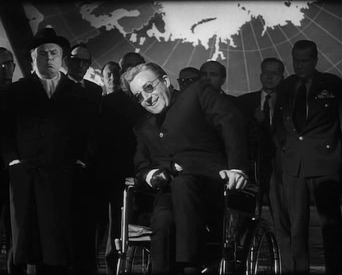
According to a report moments ago – "Vice President Dick Cheney will be in a wheelchair during Tuesday's Presidential Inauguration, after pulling a muscle in his back while moving, White House spokeswoman Dana Perino said" (CNN)
I cannot envision his recreating a more appropriate iconic image wholly representative of his character, demeanor and role these last eight years. Can you?
I cannot envision his recreating a more appropriate iconic image wholly representative of his character, demeanor and role these last eight years. Can you?
Friday, January 02, 2009
A letter to a friend: Unions
I have not been watching the auto industry issues very closely but I am concerned about some of what I read. My mother and father were both union members and often the best Christmas gift I received as a child was from the union. Having been raised in Chicago, I remember well the stories of the violence against union organizing in the early twentieth century. The unions made the difference between a living wage and basically indentured servitude. I remember my mother speaking of the difference in wages after her laundry unionized. I think her wage for hand pressing and folding a shirt went up to about .03 cents a shirt. She was 15. My dad worked for US Steel at its mill in South Chicago and, though wages were a continuing issue, safety concerns were paramount. Most importantly in each situation there was a structure that spoke for the workers. Prior to that, to speak up about conditions would cost a worker a job or a beating. To be sure, if one survived the career in the mill or sweat shops, the companies ultimately provided retirement and health benefits. A situation not unlike the Armed Services though each time a union contract came up for renewal all benefits and wage amounts were up for renegotiation. In my parent's situation, the contract that he was under from US Steel called for all benefits to end upon his death. So my mother lost all health benefits when he died. Other workers under different contracts may not have had their elderly spouses abandoned. Remember, in that generation most women were housewives.
The point, it seems to me, is that contracts for future benefits were always subject to market forces. The retirees now benefiting from contracts entered into years ago are in that situation because of the give and take of market power and negotiation. These were not the result of largess on the part of the companies or extortion of the workers.
The disparity between UAW wages in the North and foreign companies in the Southern states comes from market forces and, I expect, from the lack of unions in Southern states. As an attorney in private practice here in Richmond I saw first hand the substantial and heavily moneyed effort to keep unions out. I represented the companies. It seems to me that there is little difference in the actual wages paid whether North or South. [see the articles below] This lack of disparity is due in part to the existing market situation of higher existing UAW wages. Otherwise, I am confident that Toyota to South Carolina would be paying close to Mexican wage scales. Further, the plants in the South are relatively new and accordingly do not have added weight of existing, negotiated benefits for retirees and current employees.
Our country has come a long way with established safety regulations and so that effort on the part of unions need not be as needed or confrontational. But laborers have value in a capitalist system. The most effective way to insure a correct value for labor is by matching the power of the corporate structure against a unified, labor structure. There is no compassion in capitalism. Our country has dramatically moved away from employer health and retirement benefits. We are now in the transitional period when substitutes for employer programs and even social security are developing daily.
The bottom line for me is that the auto industry, as with American manufacturing, is not failing because of labor costs. The paradigm has changed. The globalization of United States corporations attracted by exceptionally cheap labor overseas is merely the logical extension of capitalism. Corporations are not good citizens. They have no patriotism. American labor can perform as well or better than any other national group. Maybe they just have to accept wages comparable to those in a village outside Ho Chi Minh City or wait for those villagers to organize for appropriate wages and benefits.
http://www.uaw.org/barg/07fact/fact02.php
http://www.heritage.org/research/economy/wm2162.cfm
http://bigthreeauto.procon.org/viewadditionalresource.asp?resourceID=2050
The point, it seems to me, is that contracts for future benefits were always subject to market forces. The retirees now benefiting from contracts entered into years ago are in that situation because of the give and take of market power and negotiation. These were not the result of largess on the part of the companies or extortion of the workers.
The disparity between UAW wages in the North and foreign companies in the Southern states comes from market forces and, I expect, from the lack of unions in Southern states. As an attorney in private practice here in Richmond I saw first hand the substantial and heavily moneyed effort to keep unions out. I represented the companies. It seems to me that there is little difference in the actual wages paid whether North or South. [see the articles below] This lack of disparity is due in part to the existing market situation of higher existing UAW wages. Otherwise, I am confident that Toyota to South Carolina would be paying close to Mexican wage scales. Further, the plants in the South are relatively new and accordingly do not have added weight of existing, negotiated benefits for retirees and current employees.
Our country has come a long way with established safety regulations and so that effort on the part of unions need not be as needed or confrontational. But laborers have value in a capitalist system. The most effective way to insure a correct value for labor is by matching the power of the corporate structure against a unified, labor structure. There is no compassion in capitalism. Our country has dramatically moved away from employer health and retirement benefits. We are now in the transitional period when substitutes for employer programs and even social security are developing daily.
The bottom line for me is that the auto industry, as with American manufacturing, is not failing because of labor costs. The paradigm has changed. The globalization of United States corporations attracted by exceptionally cheap labor overseas is merely the logical extension of capitalism. Corporations are not good citizens. They have no patriotism. American labor can perform as well or better than any other national group. Maybe they just have to accept wages comparable to those in a village outside Ho Chi Minh City or wait for those villagers to organize for appropriate wages and benefits.
http://www.uaw.org/barg/07fact/fact02.php
http://www.heritage.org/research/economy/wm2162.cfm
http://bigthreeauto.procon.org/viewadditionalresource.asp?resourceID=2050
Saturday, December 27, 2008
Proportionate Terrorism 12/27/08 ?
The article on NYTimes.com read simply "Israeli Gaza Strike Kills 225" and wounds some 700 Palestinians. The article gave an explanation for the attack: "But in some ways the [upcoming Israeli] elections have made it impossible for officials like Mr. Barak not to react, because the public has grown anxious and angry over the rocket fire, which while causing no recent deaths and few injuries is deeply disturbing for those living near Gaza."
The world has for years been "anxious and angry" and has experienced terrorism and death while Israeli governments alternate factions cold and colder to resolution and Palestinian "authorities" feign or hide behind claims of sincere desires for resolution. And each side must continue to use the imposition of terror to express the validity of its position.
Neither the Palestinian nor the Israeli people deserve death because of the intransigence of their respective rulers and the criminally inept policies of the United States. This visceral reaction on my part to this day's news must be followed with a broader analysis though it will benefit only the writer.
The world has for years been "anxious and angry" and has experienced terrorism and death while Israeli governments alternate factions cold and colder to resolution and Palestinian "authorities" feign or hide behind claims of sincere desires for resolution. And each side must continue to use the imposition of terror to express the validity of its position.
Neither the Palestinian nor the Israeli people deserve death because of the intransigence of their respective rulers and the criminally inept policies of the United States. This visceral reaction on my part to this day's news must be followed with a broader analysis though it will benefit only the writer.
Tuesday, December 09, 2008
Government in Illinois
Chicago/Illinois politicians generally hone their criminal talents from birth within the party system. They should be given some credit for the unswerving commitment to a life of cutting edge bribery. These are not amateurs at corruption but they are, invariably, so greedy as to cross the line into stupidity. Growing up in Chicago under the wing of the old Mayor Daley the corruption in the city was systemic. But the city ran exceptionally well with a shadow government of democratic precinct captains and corrupt officials. As a resident driver back then, one knew to have a five or ten dollar bill wrapped around the driver's license on the chance one was stopped for a traffic offense. The corrupt office holders, contractors and appointees picked up the trash, shoveled the snow, cleaned the parks, acquitted the guilty and protected the bookies. But if you didn't especially need justice or honest official conduct, life was calm and stable.
Thursday, December 04, 2008
A note to the ASPCA
I take issue with the decision to place an ASPCA ad calling attention to the great number of animals abandoned during the holidays during the CNN report tonight by Ms. Amanpour on the genocide of humans in Darfur. There is no measure of equality between these two situations. The juxtaposition of these issues by the ASPCA during this program was more than insensitive, it was sickening and obscene. Your organization should be ashamed of this insensitive stupidity.
Wednesday, November 19, 2008
End of an Era - Worth Repeating
"Words had to change their ordinary meaning and to take that which was now given them. Reckless audacity came to be considered the courage of a loyal ally; prudent hesitation, specious cowardice; moderation was held to be a cloak for unmanliness; ability to see all sides of a question, inaptness to act on any...The advocate of extreme measures was always trustworthy; his opponent a man to be suspected...." Thucydides (circa 420 BCE)
Interesting how "BCE" might also refer to "Bush/Cheney Era.
Merely an Observation
Have you ever waited in a checkout line while a women ahead of you searches through, readjusts, drops and replaces all or a portion of the contents of an oversized shoulder bag? Of course, we all have. We sigh, groan or cuss under our breath but we learn to expect, with a high degree of probability, this activity because such conduct seems to be in the nature of the beast. Apparently, this lesson had been lost on NASA.
'Oh Great': Astronaut Loses Tool Bag During Spacewalk
Wednesday, November 19, 2008 (Associated Press)
HOUSTON — A spacewalking astronaut accidentally let go of her tool bag Tuesday after a grease gun inside it exploded, and helplessly watched as the tote and everything inside floated away.
It was one of the largest items ever to be lost by a spacewalker, and occurred during an unprecedented attempt to clean and lube a gummed-up joint on a solar panel.
Heidemarie Stefanyshyn-Piper was just starting to work on the joint when the mishap occurred.
She said her grease gun exploded, getting the dark gray stuff all over a camera and her gloves. While wiping off herself, the white, backpack-size bag slipped out of her grip, and she lost all her other tools.
"Oh, great," she mumbled.
'Oh Great': Astronaut Loses Tool Bag During Spacewalk
Wednesday, November 19, 2008 (Associated Press)
HOUSTON — A spacewalking astronaut accidentally let go of her tool bag Tuesday after a grease gun inside it exploded, and helplessly watched as the tote and everything inside floated away.
It was one of the largest items ever to be lost by a spacewalker, and occurred during an unprecedented attempt to clean and lube a gummed-up joint on a solar panel.
Heidemarie Stefanyshyn-Piper was just starting to work on the joint when the mishap occurred.
She said her grease gun exploded, getting the dark gray stuff all over a camera and her gloves. While wiping off herself, the white, backpack-size bag slipped out of her grip, and she lost all her other tools.
"Oh, great," she mumbled.
Saturday, October 11, 2008
A Continued Response
The friend answered with his observation that "many were jumping on the Bush-bashing bandwagon." Taking this personally I responded:
"It seems to me that everyone standing in line is not waiting to jump on any "bashing" bandwagon. I think the lines we see are quite simply the growing - though relatively static - lines for unemployment insurance, company grade officer resignations, Veterans care, bank/401K withdrawals, small business/student/home mortgage loans, criminal legal representation (primarily former Fannie Mae, Freddie Mac, Lehman Brothers, et al.) and voter registration (OK. This last one has almost all Bush bashing democrats)."
The friend then commented that he felt confident that he could show the democrats at least equally as responsible. And, so I said:
"Generally, you will not get an argument from me. It's an "Imperial Presidency" that I condemn. The elected representatives from both political parties, for most of at least the last 16 or so years, have consistently set the table in Washington so as to ignore, corrupt and devalue our country's higher ideals and the true common good of the people."
The friend then suggested that we might all agree that less government would be better. And, so I felt compelled to add:
"I agree - with a footnote. Cutting federal and state is certainly a very worthy effort. However, the cuts should be well considered. Wholesale chopping that eliminates or guts effective oversight has repeatedly shown human nature or "the market" incapable of sustained, reasoned, fair and legal conduct. The current financial crisis has a genesis in unrestrained greed and overreaching (bottom and top) in the mortgage market and, most significantly, in the derivatives markets where oversight was non-existent. In my own personal experience as a federal criminal prosecutor I saw the aftermath of the lifting of regulatory oversight in the airline industry with wide spread use of counterfeit/surplus repair parts and negligent repair and maintenance. I had ample job security when the savings and loan institutions were taken to account, again, as a direct result of the gutting of effective oversight by elimination of inspection positions and targeted budget constraints. So, I agree with the cutting of the duplicated, ineffective and unnecessary. Yet, until there is an even playing field for each and among all, there must be reasoned oversight. Caveat emptor is not a substitute for "Equal Justice for All."
Wasn't there an old NCO adage to the affect: "The only thing that is done well is that which is inspected."?" [My friend was kind to correct me. "The hero of St. Vith--BG Bruce Clarke wrote in his book for the Commander and Leader that a unit does well that which the commander checks."
This is not Plato, but, it has been cathartic.
"It seems to me that everyone standing in line is not waiting to jump on any "bashing" bandwagon. I think the lines we see are quite simply the growing - though relatively static - lines for unemployment insurance, company grade officer resignations, Veterans care, bank/401K withdrawals, small business/student/home mortgage loans, criminal legal representation (primarily former Fannie Mae, Freddie Mac, Lehman Brothers, et al.) and voter registration (OK. This last one has almost all Bush bashing democrats)."
The friend then commented that he felt confident that he could show the democrats at least equally as responsible. And, so I said:
"Generally, you will not get an argument from me. It's an "Imperial Presidency" that I condemn. The elected representatives from both political parties, for most of at least the last 16 or so years, have consistently set the table in Washington so as to ignore, corrupt and devalue our country's higher ideals and the true common good of the people."
The friend then suggested that we might all agree that less government would be better. And, so I felt compelled to add:
"I agree - with a footnote. Cutting federal and state is certainly a very worthy effort. However, the cuts should be well considered. Wholesale chopping that eliminates or guts effective oversight has repeatedly shown human nature or "the market" incapable of sustained, reasoned, fair and legal conduct. The current financial crisis has a genesis in unrestrained greed and overreaching (bottom and top) in the mortgage market and, most significantly, in the derivatives markets where oversight was non-existent. In my own personal experience as a federal criminal prosecutor I saw the aftermath of the lifting of regulatory oversight in the airline industry with wide spread use of counterfeit/surplus repair parts and negligent repair and maintenance. I had ample job security when the savings and loan institutions were taken to account, again, as a direct result of the gutting of effective oversight by elimination of inspection positions and targeted budget constraints. So, I agree with the cutting of the duplicated, ineffective and unnecessary. Yet, until there is an even playing field for each and among all, there must be reasoned oversight. Caveat emptor is not a substitute for "Equal Justice for All."
Wasn't there an old NCO adage to the affect: "The only thing that is done well is that which is inspected."?" [My friend was kind to correct me. "The hero of St. Vith--BG Bruce Clarke wrote in his book for the Commander and Leader that a unit does well that which the commander checks."
This is not Plato, but, it has been cathartic.
Thursday, October 09, 2008
A Response
A friend today sent around an email, apparently in support of the Iraq Invasion by George W. Bush, referring to an "Associated Press article this summer [that] revealed that our troops found 550 metric tons of yellowcake a few miles south of Baghdad in 2003 and kept it secret until recently. See: http://www.msnbc.msn.com/id/25546334/ " I replied as follows:
Interesting but fundamentally irrelevant when considering the manner in which the Bush/Cheney Administration cherry-picked and fabricated intelligence, failed to follow fundamental intelligence procedures of verification (For example: "Curveball") and, when necessary to support its preordained intention to invade Iraq, lied to the American people. The more egregious of these, in my opinion, were the statements, primarily by Cheney, asserting existence of unquestionable evidence of a direct and nefarious connection between Saddam and al Qaeda.
This "yellow cake" referred to in the article was stock existing in Iraq prior to 1991. The Bush Administration's repeated dire warnings were of then "current and continuing efforts" by Saddam to obtain uranium. Independent expert conclusions following the invasion and based upon evidence within Iraq (documents, interrogations and interviews) seem to be in agreement that Saddam had stopped efforts to build a WMD program in at least 1991.
We must beat the forces opposing us in Iraq and Afghanistan and, in a joint effort with nation-building assets from within our own government and from NATO countries, assist in establishing an allied front with the resulting governments against terrorism. When this is completed it will be almost solely the achievement of the United States military command and the military and intelligence forces on the ground. The decision to invade Iraq by Bush was the stupidest decision of any president in my lifetime. The fact that the proffered rationale for the necessity of invasion was false is wholly reprehensible and worthy of continuing condemnation whatever the outcome of the wars. But, that's just my humble opinion.
Interesting but fundamentally irrelevant when considering the manner in which the Bush/Cheney Administration cherry-picked and fabricated intelligence, failed to follow fundamental intelligence procedures of verification (For example: "Curveball") and, when necessary to support its preordained intention to invade Iraq, lied to the American people. The more egregious of these, in my opinion, were the statements, primarily by Cheney, asserting existence of unquestionable evidence of a direct and nefarious connection between Saddam and al Qaeda.
This "yellow cake" referred to in the article was stock existing in Iraq prior to 1991. The Bush Administration's repeated dire warnings were of then "current and continuing efforts" by Saddam to obtain uranium. Independent expert conclusions following the invasion and based upon evidence within Iraq (documents, interrogations and interviews) seem to be in agreement that Saddam had stopped efforts to build a WMD program in at least 1991.
We must beat the forces opposing us in Iraq and Afghanistan and, in a joint effort with nation-building assets from within our own government and from NATO countries, assist in establishing an allied front with the resulting governments against terrorism. When this is completed it will be almost solely the achievement of the United States military command and the military and intelligence forces on the ground. The decision to invade Iraq by Bush was the stupidest decision of any president in my lifetime. The fact that the proffered rationale for the necessity of invasion was false is wholly reprehensible and worthy of continuing condemnation whatever the outcome of the wars. But, that's just my humble opinion.
Tuesday, October 07, 2008
An Aside
I must admit that I have been anxious to put pen to paper or, rather, finger to key, given the events and propaganda pervading the media during these closing days of the presidential campaign. For example, I wanted to write about how McCain is being disserved by those running his campaign from my perspective as a target independent swing voter. And, I expect I soon will do that. But, I am somewhat embarrassed to admit that I have wasted a moment of my time to write to the on-screen personages of a television program that I never watch. After seeing a clip from "The View" and reading associated commentary, I sent the following into the bowels of their website:
"Elizabeth Hasselbeck is correct in her view of the importance of the personal associations chosen by candidates. Of course, there are general issues presented in this presidential election that are important for the electorate to consider. However, the character of the person who would be president is above all other matters the most crucial of these. It is not a "smear" to seriously discuss the associations a candidate choses to maintain in his or her personal and professional life. Recall the discusssions in the past of a candidate's membership in an "all-white" country club or an "all-male" business club. It is one thing to question the weight to be given any relevant issue and a far different matter to deny its relevance entirely. "You are known by the company you keep." Can the others on the show reasonably deny that?"
"Elizabeth Hasselbeck is correct in her view of the importance of the personal associations chosen by candidates. Of course, there are general issues presented in this presidential election that are important for the electorate to consider. However, the character of the person who would be president is above all other matters the most crucial of these. It is not a "smear" to seriously discuss the associations a candidate choses to maintain in his or her personal and professional life. Recall the discusssions in the past of a candidate's membership in an "all-white" country club or an "all-male" business club. It is one thing to question the weight to be given any relevant issue and a far different matter to deny its relevance entirely. "You are known by the company you keep." Can the others on the show reasonably deny that?"
Saturday, September 27, 2008
Gut Reactions
The first debate has just concluded and I can get back to the Cubs game. Since they are losing I’ll try to multi-task and write my initial reaction to the debate. I expected the debate to present the candidates in a forum and within a debate structure that would permit exposure of their comparative knowledge and “performance” skills. No one should make a decision on a candidate based on observations of a television debate. I had very limited expectations of the value of the exercise. This debate lived down to my expectations. First of all, there should have been tighter control of the timing. Each candidate appeared at times to be satisfied with their response but the moderator pushed simply for more of the same. Had the moderator asked a more focused second or third question we would have learned more about the stated position. McCain clearly showed more self-control and appeared the more secure. Sen. Obama frequently showed impatience and an immaturity in his facial expressions, body movements and attempts at interruption when Sen. McCain spoke. Sen. McCain’s expressions were, at worst, paternalistic at times.
Substantively, over an hour was spent discussing the current economic crisis although the debate was scheduled to concern foreign policy. With the relatively unbridled economic discussion there was little time remaining for foreign policy and a good portion of that time was spent on Iraq/Afghanistan and Iran. Assuredly, these countries are important for our country and there was a limited time for discussion of Russia. Other important areas of foreign policy were left out completely. I have repeatedly heard their positions on Iraq/Afghanistan and Iran and allowing the repetition was of no value to anyone but, possibly, a Van Winkle. I hoped to hear how they perceive and would deal with China, Venezuela, Cuba, Africa, India/Pakistan, India, or how about genocide, globalization, or differentiated Muslim extremism in the world. The debate as structured and controlled was a major disappointment.
During the movement through the channels to the Cubs channel, I heard the talking heads begin to discuss what they thought were the most important issues of criticism of the debate. McCain was expected to “hit a home run” in this debate on foreign policy and in their view he had not, so “points to Obama.” “Obama stood tall.” “Obama held his own.” I should admit that I never got over to Fox. Well, although I disagreed with McCain on a few of the issues and am sympathetic to Obama’s counter positions, I believe McCain was the clear winner of the overall debate. I have no doubt that Sen. Obama will be seen to have won on the economic portion. However, his strength in that portion of the debate is neither his substantive policies nor his abilities. Any perceived victory is purely the result of the effects now felt by Americans of the Bush/Republican debacles. Viewing the overall debate, McCain came across with confidence, knowledge and relevant experience and expressed himself clearly and decisively. Even Sen. Obama repeatedly said that he “agreed with John.” McCain was unnecessarily repetitious at times but a good part of the blame for that was in the structure of the debate and the lack of control by the moderator. Sen. McCain is still the best candidate but he still carries ugly luggage.
Substantively, over an hour was spent discussing the current economic crisis although the debate was scheduled to concern foreign policy. With the relatively unbridled economic discussion there was little time remaining for foreign policy and a good portion of that time was spent on Iraq/Afghanistan and Iran. Assuredly, these countries are important for our country and there was a limited time for discussion of Russia. Other important areas of foreign policy were left out completely. I have repeatedly heard their positions on Iraq/Afghanistan and Iran and allowing the repetition was of no value to anyone but, possibly, a Van Winkle. I hoped to hear how they perceive and would deal with China, Venezuela, Cuba, Africa, India/Pakistan, India, or how about genocide, globalization, or differentiated Muslim extremism in the world. The debate as structured and controlled was a major disappointment.
During the movement through the channels to the Cubs channel, I heard the talking heads begin to discuss what they thought were the most important issues of criticism of the debate. McCain was expected to “hit a home run” in this debate on foreign policy and in their view he had not, so “points to Obama.” “Obama stood tall.” “Obama held his own.” I should admit that I never got over to Fox. Well, although I disagreed with McCain on a few of the issues and am sympathetic to Obama’s counter positions, I believe McCain was the clear winner of the overall debate. I have no doubt that Sen. Obama will be seen to have won on the economic portion. However, his strength in that portion of the debate is neither his substantive policies nor his abilities. Any perceived victory is purely the result of the effects now felt by Americans of the Bush/Republican debacles. Viewing the overall debate, McCain came across with confidence, knowledge and relevant experience and expressed himself clearly and decisively. Even Sen. Obama repeatedly said that he “agreed with John.” McCain was unnecessarily repetitious at times but a good part of the blame for that was in the structure of the debate and the lack of control by the moderator. Sen. McCain is still the best candidate but he still carries ugly luggage.
Subscribe to:
Posts (Atom)